

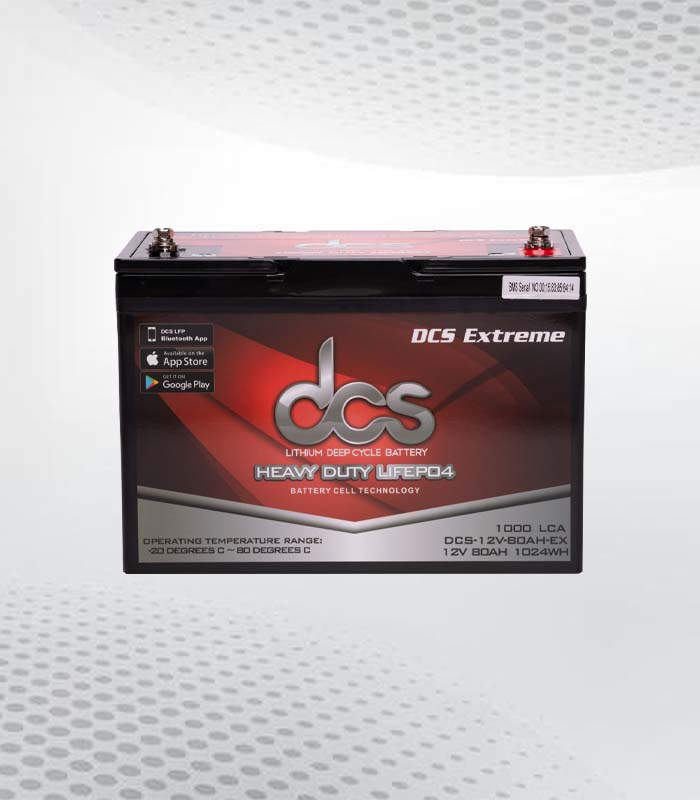

As the world continues to shift towards renewable energy sources, the demand for efficient and reliable energy storage solutions has never been higher. One such solution that has been gaining traction in recent years is the 80ah lithium battery. In this blog post, we will take an in-depth look at the 80-ah lithium battery, exploring its basics, advantages, potential applications, and future trends in lithium battery technology.
Understanding the Basics of 80Ah Lithium Batteries
An 80-ah lithium battery is characterized by its capacity to store 80 ampere-hours of electrical energy, a metric which signifies the amount of current a battery can supply over a specified duration. This particular type of lithium-ion battery is distinguished by its superior energy storage capability, enabling it to power devices for longer periods compared to batteries with lower ampere-hour ratings. A notable feature of 80Ah lithium batteries is their remarkable energy density, allowing for a compact and lightweight design, which contributes to their widespread adoption across various applications.
The Advantages Of Using An 80 Ah Lithium Battery
The adoption of 80Ah lithium batteries brings forth numerous benefits, particularly in their capacity to enhance the efficiency and reliability of energy storage systems. These units boast a significantly higher energy density compared to traditional battery technologies, which allows them to deliver a greater amount of energy from a more compact and lightweight form.
This characteristic is particularly beneficial in applications where space and weight are critical factors, such as in portable electronic devices and electric vehicles. Furthermore, 80Ah lithium batteries exhibit a reduced self-discharge rate, ensuring that they retain their charge for extended periods when not in active use. This feature is invaluable in scenarios where batteries are expected to provide standby power or are subjected to infrequent use.
Additionally, the operational longevity of 80 ah lithium battery surpasses that of many alternative options, with the ability to endure numerous charge-discharge cycles without a significant decline in performance. This durability not only extends the usable life of the batteries but also contributes to a reduction in replacement costs and resource consumption over time.
The environmental aspect of using 80Ah lithium batteries also cannot be overstated; their lack of heavy metals and other toxic substances makes them a more sustainable choice, aligning with global efforts towards reducing environmental pollutants and fostering a cleaner energy future.
 Potential Applications For Lithium Battery 80ah
The versatility of lithium battery 80ah extends their utility beyond traditional realms into a myriad of modern applications.
- Their robust energy density and enduring cycle life render them perfect for powering electric vehicles (EVs), which are at the forefront of transitioning towards greener transportation solutions.
- In the domain of renewable energy, these batteries play a pivotal role in solar power storage systems, capturing excess energy during peak sunlight hours for later use, thereby ensuring a stable energy supply even when sunlight is not available.
- Additionally, the compact and lightweight nature of these batteries makes them an ideal choice for portable electronics, ranging from high-performance laptops to essential medical devices that require reliable power in remote locations.
- Moreover, their reliability and longevity are critical in backup power systems, offering peace of mind during power outages in both residential and commercial settings.
- As the grid becomes increasingly reliant on renewable sources, 80Ah lithium batteries are becoming indispensable in grid-scale energy storage projects, helping to balance supply and demand, and stabilise the power network.
- Their broad application spectrum underscores the significant role they play in driving the future of energy storage and management across diverse sectors.
Comparing 80Ah Lithium Batteries to Other Battery Types
In an objective comparison with other battery technologies, 80Ah lithium batteries exhibit several noteworthy advantages. They manifest a superior energy density, enabling them to store more power in a lesser volume, making them particularly suitable for applications where space is at a premium. Unlike lead-acid or nickel-cadmium counterparts, 80Ah lithium batteries offer a more extended cycle life, ensuring operational efficiency over a longer duration. These batteries also outshine others in terms of charging speed, being capable of achieving a full charge more rapidly, which enhances their usability in scenarios requiring quick energy replenishment.
Although the initial outlay for lithium batteries may be higher than for traditional battery types, their prolonged lifespan and lower maintenance requirements can render them more cost-effective in the long run. Additionally, they are devoid of toxic materials such as lead or cadmium, which presents a greener, more environmentally friendly energy storage option. It’s imperative, however, to balance these benefits with the specific needs of your application to determine the most appropriate battery technology for your requirements.
Maintenance And Safety Tips For Lithium 80ah Battery
Maintaining and safeguarding 80Ah lithium batteries necessitates adherence to specific protocols to optimise their operational life whilst mitigating potential risks. It is paramount to store these batteries under controlled environmental conditions, ideally within a temperate and moisture-free environment to circumvent detrimental effects on their performance and longevity. Exposure to excessive heat or cold should be scrupulously avoided as extreme temperatures can precipitate inefficiencies and compromise safety.
When charging lithium 80ah battery, utilising the correct charger, explicitly designed for these types of batteries, is crucial. This ensures that the charging process aligns with the battery’s specifications, thereby preventing instances of overcharging which can lead to overheating and potential safety hazards. Similarly, allowing the battery to deplete entirely before recharging should be avoided; a practice that can significantly diminish its lifespan.
It is also advisable to conduct regular inspections of the battery’s condition, looking out for any signs of damage such as swelling, leaks, or unusual odours, which could indicate internal faults. In the event of identifying such irregularities, it is essential to discontinue use immediately and consult a professional for advice.
By following these essential maintenance and safety guidelines, users can ensure the enduring efficacy and secure operation of their 80Ah lithium batteries.
Future Trends and Developments in Lithium Battery Technology
The landscape of lithium battery technology is on the cusp of transformative advancements, with industry and academic research focused on pushing the boundaries of capacity, efficiency, and safety. Innovations in material science are leading the charge, with the development of nanostructured electrodes that promise to significantly enhance energy storage capabilities. Concurrently, efforts are underway to harness the potential of solid-state electrolytes, which could revolutionise the sector by offering batteries that are not only safer but also capable of storing more energy per unit volume.
Another promising avenue is the exploration of lithium-sulphur (Li-S) batteries, which, owing to their higher theoretical energy density, could offer a leap in performance over current lithium-ion counterparts. These batteries are expected to be lighter and potentially cheaper to produce, addressing two critical factors in battery adoption and sustainability. Furthermore, the integration of artificial intelligence into battery management systems is being researched to optimise charging protocols, enhance performance, and extend lifespan, thereby making lithium batteries more adaptable to a wider array of applications and environments.
How to Choose the Right 80-ah lithium battery for Your Needs
Selecting the appropriate 80-ah lithium battery requires careful consideration of several key aspects to ensure it meets the demands of your specific application.
- Firstly, assess the voltage requirements of your system to guarantee compatibility. The physical dimensions and weight of the battery are also crucial, especially for mobile applications where space constraints and portability are important.
- Furthermore, delve into the cycle life of the battery, which indicates how many charge and discharge cycles it can endure before its capacity begins to wane.
- This is particularly relevant for applications that demand high levels of reliability over time. Safety features should not be overlooked; opt for batteries equipped with protection against overcharging, overheating, and short-circuiting to safeguard both the battery and your equipment.
- Investigating the manufacturer’s reputation and the availability of warranties can provide additional assurance regarding the quality and durability of the battery.
- By meticulously evaluating these factors, you can make an informed decision that aligns with the operational requirements and longevity expectations of your project, ensuring optimal performance and value.
80-ah lithium battery Performance Test Results
Rigorous performance evaluations of 80Ah lithium batteries have underscored their superior efficiency and durability. These assessments reveal that such batteries excel in maintaining a consistent energy output over prolonged durations, a testament to their robust energy density. Notably, when subjected to repetitive charging and discharging cycles, the 80Ah lithium batteries display minimal capacity loss, highlighting their resilience and long-term utility.
This rapid recharge capability, coupled with their steadfast performance across numerous cycles, positions the 80Ah lithium batteries as a standout choice for applications demanding reliable and enduring power sources. It is this blend of high energy density, cycle durability, and charging efficiency that encapsulates the technological prowess of the 80-ah lithium battery, setting a new benchmark for energy storage solutions.
80-ah lithium battery Lifespan
The longevity of an 80-ah lithium battery is influenced by a constellation of factors that interplay to determine its operational life. Among these, how the battery is utilised – including the frequency of charge-discharge cycles it undergoes, the depth of discharge, and adherence to recommended charging protocols – plays a pivotal role. Additionally, environmental conditions, particularly temperature, exert a considerable impact, with extremes of heat or cold potentially curtailing the battery’s lifespan.
It is crucial to appreciate that while these batteries are engineered for durability and a significant number of charge cycles, their performance gradually degrades over time. This degradation is not abrupt but rather a slow diminution of capacity, which manifests as a gradual decrease in the energy the battery can store and deliver. Engaging in practices that mitigate stress on the battery – such as avoiding complete discharges and not exposing the battery to prolonged high temperatures – can help in prolonging its effective lifespan.
Monitoring the battery’s health through periodic checks is advisable. This not only aids in optimising its usage but also in identifying the right time for its replacement, before it fails to meet the energy requirements of its application. Understanding and anticipating the natural progression of wear and degradation in these batteries allows for more efficient planning and replacement, ensuring that the energy needs continue to be met without interruption. While the average lifespan offers a general guideline, individual usage patterns and care will significantly influence the actual service life of an 80-ah lithium battery.
Best Practices for 80Ah Lithium Batteries
To ensure that your lithium battery operates at peak efficiency throughout its lifecycle, certain key practices should be adhered to.
It is imperative to avoid exposing the battery to extreme temperature conditions, as both excessive heat and severe cold can significantly impair its performance and durability. When charging, utilise a charger specifically tailored for lithium batteries to mitigate the risk of overcharging, which can lead to overheating and potentially hazardous situations.
Over-discharging should also be avoided; it is beneficial to recharge the battery before it is completely depleted to preserve its long-term capacity. Regular monitoring of the battery’s performance is recommended to detect any signs of degradation early on. This proactive approach facilitates timely replacement before the battery’s declining capacity compromises its application.
Additionally, when the time comes to replace the battery, responsible recycling is encouraged to minimise environmental impact and facilitate the recovery of valuable materials for future use. By following these guidelines, users can optimize the usage and extend the service life of their 80Ah lithium batteries, contributing to more sustainable energy management practices.
FAQs
Q1: How does an 80ah lithium battery compare to other types of batteries in terms of lifespan?
A1: An 80ah lithium battery typically offers a longer lifespan due to its higher energy density and ability to withstand numerous charge-discharge cycles with minimal degradation. Unlike lead-acid or nickel-cadmium batteries, it maintains efficiency over a more extended period, making it a more cost-effective choice in the long run.
Q2: Can 80Ah lithium batteries be used in all types of weather conditions?
A2: Whilst 80Ah lithium batteries are robust and can operate in a wide range of temperatures, extreme conditions can affect their performance and longevity. It is advisable to avoid exposing them to excessive heat or cold to ensure optimal operation and extend their service life.
Q3: Are there any special maintenance requirements for 80Ah lithium batteries?
A3: 80Ah lithium batteries require minimal maintenance but following specific practices can enhance their performance. This includes using a compatible charger, avoiding complete discharge, and storing them in a temperate, dry environment. Regular checks for any signs of damage or wear can also contribute to their safety and longevity.
Conclusion
In summary, the 80ah lithium battery stands as a cornerstone in the advancement of energy storage technologies. Its superior energy density, longevity, and operational efficiency make it a pivotal asset across a wide spectrum of applications, from electric vehicles to renewable energy storage and portable electronic devices. As we navigate towards a future dominated by sustainable energy solutions, the significance of adopting such advanced battery technology cannot be overstated. The ongoing innovations in lithium battery technology, including the development of solid-state and lithium-sulphur batteries, promise even greater efficiency and safety, heralding a new era of energy storage.
| Other Good Articles to Read |
| Skank Blogs |
| Unreal Blogs |
| Tba Blogs |
| All City Forums |
| Dany Blogs |
| Refuge Blogs |
| The Music Blogs |
| Key Forums |
| The Big Blog Theory |
| Joe Blogs |
| Blogs 4 Me |
| Blogs Emon |
| Related Business Listings |
| Directory Submissions |
| Regional Directory |